In the cannabis packaging industry, glass jars and bottles are not only required to ensure airtight sealing and product safety, but also to deliver premium aesthetics and compatibility with advanced decoration processes.
To guarantee consistent performance in coating, screen printing, labeling, and assembly, a systematic quality control system must be implemented throughout production.
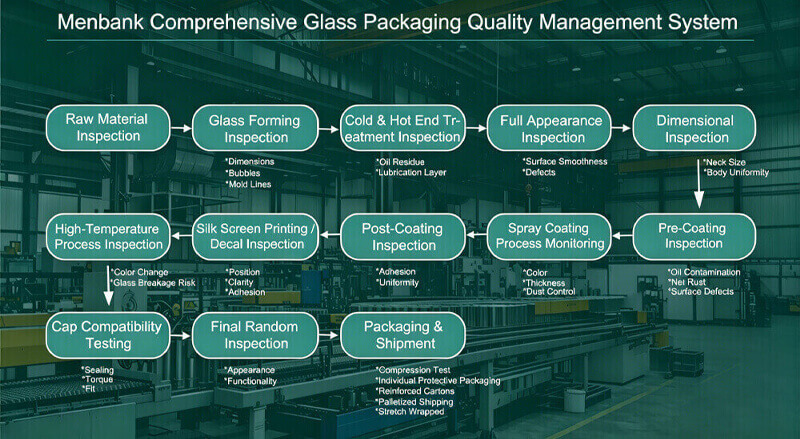
1. Pre-Production Quality Control (Critical for Cannabis Packaging)
Neck Finish Tolerance Control (Key Control Point)
Accurate neck dimensions are essential for coating and closure compatibility:
- - With fixtures: mandatory fitting test
- - Without fixtures: tolerance must be within ±1mm
Risks if uncontrolled:
- - Fixture mismatch
- - Uneven coating
- - Reduced production efficiency
Rust & Residue Risk in Wide-Mouth Jars (Cannabis Focus)
For cannabis jars:
- - Inspect bottom for mesh belt rust and debris
Impact on coating:
- - Dark coatings: may partially conceal defects
- - Light / translucent coatings: defects become highly visible
Recommendation: Control contamination at the source (production environment)
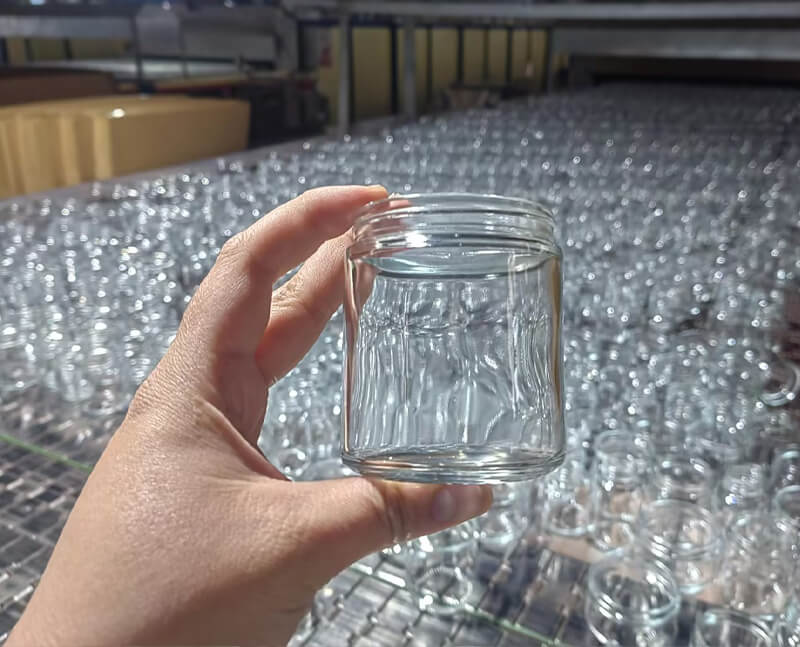
Glass Surface Quality Standards
All bottles must meet:
- - Smooth and uniform surface
- - No deformation, cracks, or dents
- - No bubbles, seeds, or stones
- - Proper mold seam alignment
Impact: Directly affects:
- - Coating adhesion
- - Printing clarity
- - Overall visual quality
Embossed Logo Quality Control
For custom cannabis packaging branding:
- - Embossed logos must be sharp and well-defined
- - No blur or incomplete forming
Importance: Strong impact on brand image and shelf appeal
Weight Consistency Control
- - For bottles ≥150g: tolerance within ±10g
- - Especially critical for jars
Purpose: Ensure consistent filling volume for clients
New Mold Validation
All new molds must undergo sampling to confirm:
- - Dimensional accuracy
- - Visual quality
- - Compatibility with decoration processes
2. Spray Coating Quality Control
Surface Contamination Inspection (Core Risk)
Check for:
- - Oil residues
- - Mold debris
Sources:
- - Mold lubricants
- - Unclean handling tools
Note: Even dark coatings may not fully hide defects, especially on neck areas
Surface Defect Standards
Common defects include:
- - Flow marks (horizontal lines)
- - Scratches (vertical “cat claw” marks)
- - Thick or double seam lines
- - Bubbles and pinholes
Defect severity ranking:
Bubbles/Pinholes → Flow marks → Scratches → Seam lines → Vent marks
Acceptance standards:
- - Solid coating: no visible defects allowed
- - Translucent coating: evaluated case-by-case
Mesh Belt Rust Inspection (Critical Point)
Inspection method:
- - Use white paper to check the bottle base for yellow rust spots
Prevention:
- - Apply white latex or lime coating on conveyor belts
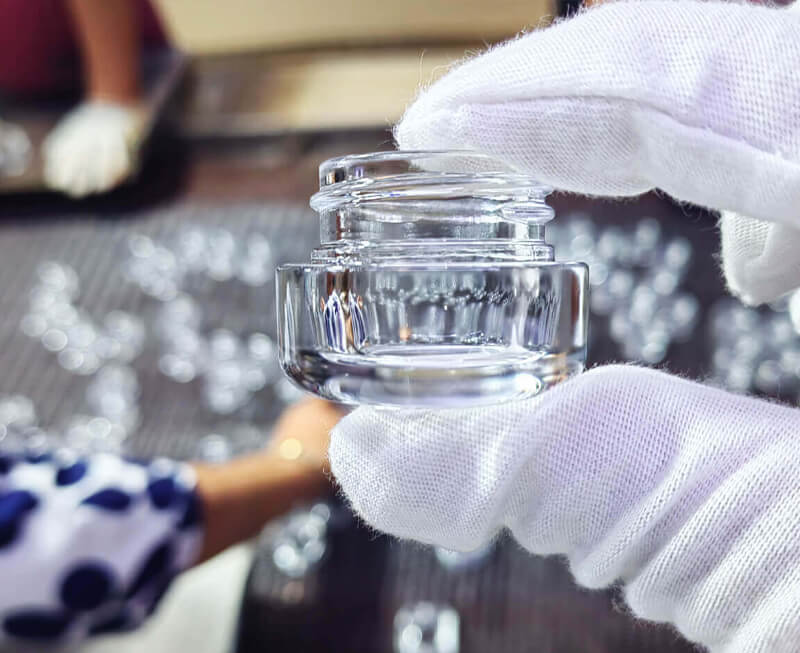
Dimensional & Structural Requirements
- - Inner diameter determines fixture compatibility
- - Fixture types:
- - Neck masking fixtures (plug-in / threaded)
- - Non-masking fixtures
Structure requirements:
- - No shoulder collapse
- - No under-formed body
- - Fully formed base
Hot/Cold End Coating Residue
Glass may contain a protective layer:
- - Reduces coating adhesion
- - Causes peeling or uneven finish
Solution: Pre-coating washing/cleaning process
Coating Process Control
Strictly monitor:
- - Spray gun angle & flow rate
- - Coating thickness & color consistency
- - Dust-free environment
Inspection standard:
- - Check every 20 minutes
- - Monitor continuously for 3 cycles
⚠️ If followed by screen printing or hot stamping, temperature must be pre-controlled
3. Screen Printing Quality Control
Surface Requirements
- - Smooth surface, no particles
- - Flat seam lines without protrusion
Printing Guidelines
- - Logos should avoid mold seams (unless intentionally designed)
Color & Position Accuracy
- - Must match approved samples exactly
Film (Stencil) Inspection
- - Prevent missing or distorted patterns
High-Temperature Printing Risks
- - Color deviation
- - Bottle breakage (higher risk for wide-mouth jars)
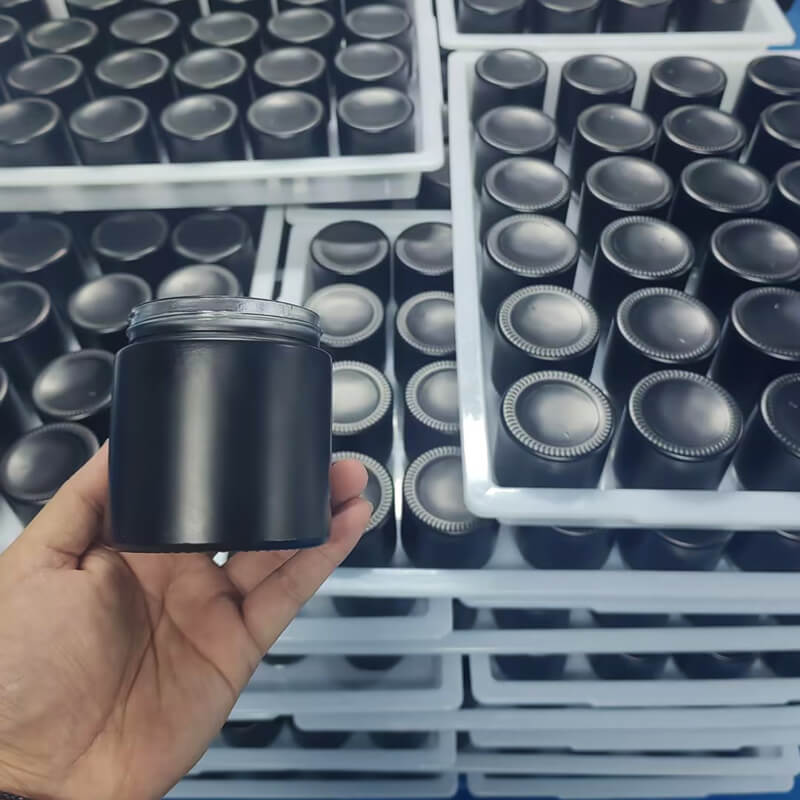
4. Decal Application Quality Control
Pre-Application Verification
- - Correct artwork placement
- - Complete content
- - Consistency with design files
Common Defects
- - Misalignment
- - Wrinkles or bubbles
- - Application over mold seams
High-Temperature Risks
- - Potential cracking after firing
Final inspection must be strictly enforced
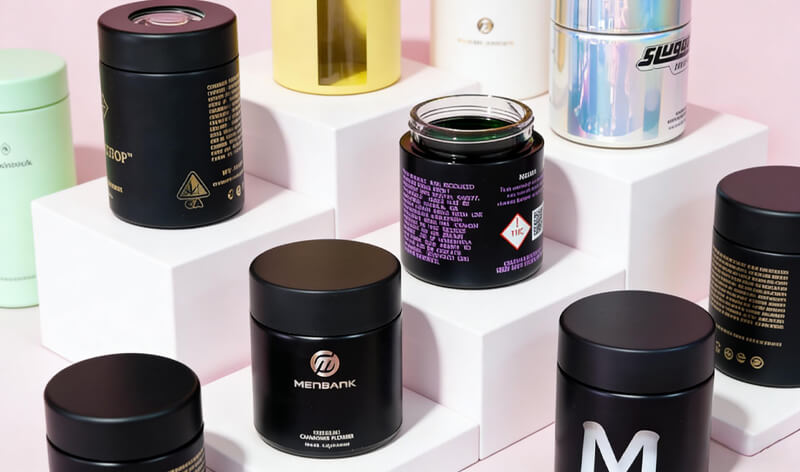
Conclusion
In the cannabis packaging market, glass bottles and jars are more than containers—they are a key part of brand positioning and product value.
By implementing a full-process quality control system—from raw material inspection, forming, coating, printing to final assembly—manufacturers can ensure:
- - Consistent product quality
- - Superior visual performance
- - Stronger competitiveness in the global B2B market
Post time: Apr-16-2026